
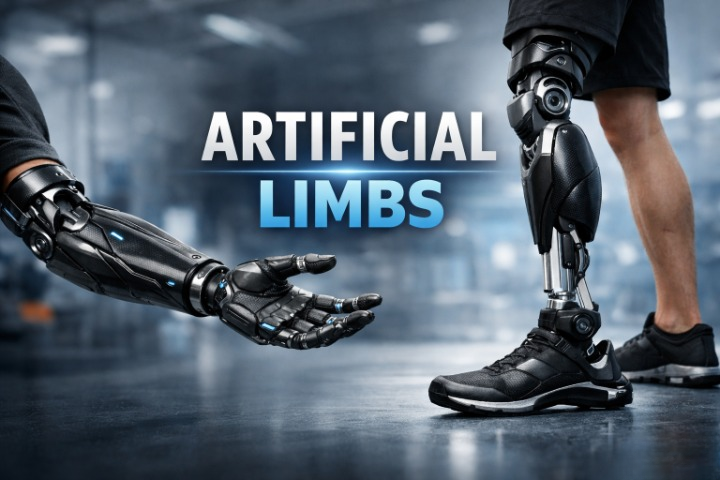
Losing a limb changes your life — but it doesn't have to stop it.
At Miembros Oasis Mobility Clinic, we work every day with people who are learning to walk again, reach for their children again, return to the sports they love, or simply make their morning coffee. Artificial limbs — also called prosthetic limbs or prosthetics — make all of that possible.
Whether you are exploring options for yourself or a loved one, or you simply want to understand how modern prosthetic technology works, this guide will walk you through everything clearly and honestly. No complicated medical jargon. Just real, useful information from specialists who care.
What is Artificial Limb ?
An artificial limb is a custom-made device designed to replace a missing arm, leg, hand, or foot. These devices are also widely known as prosthetic limbs, prosthetics, or simply prostheses.
The goal of an artificial limb is not just to fill the space where a natural limb once was. It is to restore as much of your original function, movement, and confidence as possible — so you can live your life on your own terms.
People receive artificial limbs for many different reasons, including:
- Traumatic injuries such as accidents, workplace injuries, or military combat
- Diabetes or vascular disease that leads to complications requiring amputation
- Cancer or bone tumors that require surgical removal of a limb
- Congenital limb differences — being born without a fully formed limb
No matter the cause, today's prosthetic solutions are more advanced, more comfortable, and more natural-feeling than at any point in history.
Quick Fact: The global prosthetics market is projected to exceed $9 billion by 2030, driven largely by breakthroughs in bionic and AI-assisted limb technology.
Key Aspects of Artificial Limbs You Should Understand
- Purpose — Why Artificial Limbs Matter
The primary purpose of an artificial limb goes far beyond physical appearance. A well-fitted prosthetic device serves three core functions:
-
Functional restoration means giving you back the ability to perform daily tasks — walking, gripping, writing, climbing stairs, cooking, or carrying objects. Depending on the type of prosthetic, this can closely mirror natural limb movement.
-
Physical rehabilitation helps rebuild the muscles, balance, and motor coordination that may have weakened after limb loss. Using a prosthetic limb is an active part of physical recovery, not just a passive add-on.
-
Psychological and social well-being is equally important. Research consistently shows that people with well-fitted, functional prosthetics report higher self-esteem, greater social participation, and reduced rates of depression and anxiety following amputation.
At Miembros Oasis Mobility Clinic, we treat all three purposes as equally essential to your care.
Types of Artificial Limbs — Finding the Right Match
Not every prosthetic is the same, and the right type depends on several personal factors: which limb was lost, how much of it remains, your age, activity level, and daily lifestyle goals.
Here is a straightforward breakdown:
-
Upper Limb Prosthetics — Artificial Arms and Hands - Artificial Uppper Body Part
Artificial arms and hands help restore the ability to reach, grip, lift, and carry. There are several categories:
-
Transradial prosthesis (below-elbow): Replaces the limb from just below the elbow. The natural elbow joint is preserved, which makes movement more intuitive and comfortable.
-
Transhumeral prosthesis (above-elbow): Includes an artificial elbow joint and replaces the entire arm below the shoulder.
-
Partial hand prosthesis: Designed for individuals who are missing fingers or a portion of the hand. These prosthetics are often highly customized and can include individual finger replacements.
-
Shoulder disarticulation prosthesis: For complete arm loss including the shoulder joint, these are the most complex upper-limb devices.
Artificial hands have seen remarkable innovation in recent years. Myoelectric prosthetic hands can detect muscle signals from the residual limb and translate them into precise finger movements — allowing users to type, tie shoelaces, peel fruit, and perform dozens of fine motor tasks.
2. Lower Limb Prosthetics — Artificial Legs and Feet - Artificial Lower Body Part
Artificial legs and feet are among the most common prosthetic devices prescribed. They are designed to restore gait, balance, and mobility.
-
Transtibial prosthesis (below-knee): The most frequently used lower-limb prosthetic. The natural knee joint is preserved, and users typically achieve a natural walking pattern with proper fitting and training.
-
Transfemoral prosthesis (above-knee): Includes an artificial knee joint, which requires more training to master but allows for a full range of lower-body movement.
-
Foot prosthesis: Replaces a missing foot and is often equipped with an ankle joint for navigating uneven terrain, stairs, and varied surfaces.
-
Hip disarticulation prosthesis: One of the most complex lower-limb prosthetics, designed for individuals who have lost the entire leg including the hip joint.
By How They Work
Understanding how a prosthetic actually functions helps you make a more informed decision:
-
Passive (cosmetic) prosthetics are designed primarily for appearance and basic positional support. They do not actively move but provide a natural-looking shape.
-
Body-powered prosthetics use cables and harnesses connected to the opposite shoulder or remaining limb muscles. When you move your shoulder or arm, it creates tension on the cable that opens or closes a terminal device (hook or hand).
-
Myoelectric prosthetics use small electrodes on the skin surface to pick up electrical signals from your residual muscles. The signals are processed by a microcomputer inside the prosthetic to control movements. No cables or harnesses required.
-
Hybrid prosthetics combine both systems — for example, a body-powered elbow with a myoelectric hand — to give users the best of both worlds in terms of power and precision.
-
Activity-specific and sport-specific prosthetics are built for particular activities: swimming prosthetics, running blades, cycling-specific legs, gardening attachments, and more. Athletes around the world compete at elite levels using advanced sport prosthetics.
3. Components — What Makes Up an Artificial Limb
Understanding the structure of a prosthetic limb helps you have more informed conversations with your prosthetist and know what to look for during fittings.
Every prosthetic limb, regardless of type, is built around several key components:
The socket is arguably the most critical part. It is the custom-fitted cup or shell that connects the prosthetic device to your residual limb (the remaining part of your natural limb). A well-fitted socket is the foundation of comfort, control, and function. A poorly fitted socket causes pain, skin breakdown, and instability — which is why socket fitting at Miembros Oasis Mobility Clinic is treated as a detailed, iterative process, not a one-size-fits-all task.
The suspension system keeps the prosthetic securely attached to the body. Options include:
- Pin or locking liners: A soft silicone liner rolls onto the residual limb and locks into the socket via a pin at the base.
- Suction suspension: Creates a vacuum seal between the liner and socket for a secure, sleeve-free fit.
- Osseointegration: A surgical procedure where a titanium post is implanted directly into the bone, and the prosthetic attaches to it. This eliminates the socket entirely for qualifying patients.
The pylon or structural frame forms the internal skeleton of the prosthetic, connecting the socket to the terminal device (hand, foot, or joint). Pylons are typically made from titanium, carbon fiber, or high-grade aluminum for strength without excess weight.
Terminal devices are the end components — prosthetic hands, hooks, feet, or specialized tools. Modern terminal devices range from basic passive hands to motorized, sensor-driven bionic hands with individual articulating fingers.
Joints — artificial knees, elbows, wrists, and ankles — are built into mid-limb prosthetics to allow bending and rotation. Microprocessor-controlled joints (discussed below) represent the leading edge of this technology.
Liners and cushion sleeves are the soft interface between your skin and the socket. They protect the skin, improve comfort, and enhance suspension. Materials include silicone, urethane, and thermoplastic elastomers, each with different properties for different activity levels.
4. Fitting and Care — The Process of Getting Your Prosthetic Right
Getting an artificial limb is not a single appointment — it is a journey. At Miembros Oasis Mobility Clinic, we guide every patient through a structured process to ensure the best possible outcome.
Step 1: Initial evaluation Your prosthetist will evaluate your residual limb, your overall health, your lifestyle goals, your activity level, and your home environment. This is also the time to discuss your budget, insurance coverage, and any concerns or questions you have.
Step 2: Casting and measurement A detailed mold or digital scan is taken of your residual limb to create a socket that fits precisely to your unique anatomy. No two residual limbs are the same, which is why off-the-shelf sockets rarely work well.
Step 3: Diagnostic (test) socket Before the final prosthetic is fabricated, a transparent test socket is often created so your prosthetist can visually assess fit and alignment during movement. Adjustments are made until the fit is correct.
Step 4: Definitive prosthetic fabrication Once the socket and alignment are confirmed, your permanent prosthetic is fabricated using your chosen materials and components.
Step 5: Fitting and gait/movement training The first fitting session involves careful alignment checks and the beginning of movement training. For lower limb prosthetics, this includes gait training with a physical therapist. For upper limb prosthetics, occupational therapy helps you re-learn fine motor tasks.
Step 6: Follow-up adjustments Your residual limb will change shape — especially in the first year after amputation — due to muscle strengthening, weight changes, and tissue remodeling. Regular follow-up appointments ensure your socket and alignment continue to serve you well.
5. Maintenance — Keeping Your Prosthetic in Peak Condition
Your artificial limb is a sophisticated medical device. Treating it with the same care you would give any precision instrument will extend its life and protect your health.
Daily care habits:
- Clean your socket and liner daily with mild soap and warm water. Sweat and bacteria trapped in the socket can cause skin irritation and infections.
- Inspect your residual limb every day for redness, blisters, sores, or areas of pressure. Catching these early prevents serious skin breakdown.
- Check your liner for cracks or tears. A compromised liner affects both suspension and skin protection.
- Dry your prosthetic thoroughly after exposure to moisture. Most prosthetics are not fully waterproof unless specifically designed for aquatic use.
Periodic maintenance:
- Have your prosthetist check your socket fit every 3–6 months or whenever you notice changes in comfort or performance.
- Mechanical components — knees, elbows, feet — require periodic inspection and sometimes lubrication or replacement.
- Myoelectric components and microprocessor joints need battery care, firmware updates (yes, modern prosthetics have software), and occasional sensor recalibration.
- Most prosthetic components have a recommended lifespan of 3–5 years, though this varies significantly by activity level and care.
When to contact your clinic immediately:
- Unexplained pain or increased pressure in the socket
- Skin breakdown, wounds, or infections on the residual limb
- Unusual sounds (clicking, grinding) from mechanical joints
- Noticeable changes in gait or limb function
- Significant weight gain or loss (more than 5–10 lbs can affect socket fit)
6. Modern Advancements — The Future of Artificial Limbs Is Already Here
This is one of the most exciting areas of medical technology today. If you haven't kept up with how far artificial limb technology has come, prepare to be surprised.
-
Microprocessor-controlled joints Microprocessor knees and ankles use sensors to detect walking speed, terrain, and body position hundreds of times per second. The joint automatically adjusts its resistance and movement in real time, dramatically reducing fall risk and allowing users to navigate stairs, slopes, and uneven ground with greater confidence.
-
3D printing and custom fabrication Three-dimensional printing has transformed how prosthetic sockets and components are made. Custom-fitted sockets can now be produced faster and at lower cost. 3D printing also allows for creative, personalized designs — many users choose bold colors, patterns, or artistic designs for their prosthetics rather than trying to mimic a natural skin appearance.
-
Bionic and robotic artificial limbs Bionic limbs are prosthetics integrated with advanced AI and robotics. The LUKE Arm (Life Under Kinetic Evolution), developed with DARPA funding, allows users to perform tasks as precise as picking up a grape without crushing it. Bionic legs like the Össur Power Knee actively propel the user forward rather than simply supporting weight, reducing energy expenditure significantly.
-
Osseointegration This surgical procedure anchors the prosthetic directly to the bone via a titanium implant. The result is a far more stable and natural connection than a traditional socket — users report dramatically improved proprioception (the sense of where your limb is in space) and reduced phantom limb pain.
-
Neural interfaces and sensory feedback Researchers have developed interfaces that connect prosthetic limbs directly to nerves in the residual limb. Targeted Muscle Reinnervation (TMR) and Sensory Reinnervation (TSR) reroute nerves to new muscle groups, creating more intuitive control signals and, in some systems, allowing users to actually feel temperature, pressure, and texture through their artificial hand. This is still emerging technology but is already being used in specialized clinical settings.
-
Osseointegration + Brain-Computer Interfaces (BCI) At the cutting edge, some research programs are combining bone-anchored prosthetics with brain-computer interfaces — allowing direct mental control of a prosthetic limb through thought alone. While not yet widely available, this represents the direction the field is moving.
What You Should Know Before Getting a Prosthetic or Artificial Limbs ?
Before getting a prosthetic or artificial limb, there are several important things to think through so you are fully prepared for the journey ahead. First, understand what type of prosthetic you actually need — upper limb, lower limb, partial, or full — because this shapes every decision that follows. Consider your daily lifestyle and activity level honestly, since a highly active person will need a very different device than someone with more limited mobility goals. Budget and insurance coverage matter too, so speak with your provider early about what your plan covers and what financial assistance options exist, as costs can range from a few thousand dollars for basic devices to tens of thousands for advanced myoelectric or microprocessor-controlled prosthetics. You should also understand that getting a prosthetic is not a one-day process — it involves multiple fittings, adjustments, and weeks or months of rehabilitation and training before the device feels natural and functional. Maintenance is an ongoing commitment as well, requiring daily cleaning, periodic socket adjustments (especially in the first year as your residual limb changes shape), and eventual component replacement. Finally, and perhaps most importantly, prepare yourself mentally — adapting to a prosthetic limb takes patience, consistent effort, and a strong support system, but with the right clinical team guiding you, like the specialists at Miembros Oasis Mobility Clinic, the results can be genuinely life-changing.
Challenges Faced by Artificial Limb Users
Here are the key challenges faced by artificial limb users:
-
Initial Discomfort and Skin Irritation — The residual limb needs time to adjust to the socket, and during this period users may experience redness, blisters, sweating, or pressure sores, especially in the early weeks of use.
-
Finding the Right Fit — Every residual limb is unique and changes shape over time due to muscle development or weight fluctuations, meaning the socket may need frequent adjustments to maintain a comfortable and functional fit.
-
Learning Curve for Movement and Control — Using a prosthetic limb is a completely new physical skill that requires significant practice, patience, and professional rehabilitation training before daily tasks feel natural or effortless.
-
Phantom Limb Pain — Many amputees experience pain, tingling, or sensations that appear to come from the missing limb, which can be persistent, unpredictable, and emotionally distressing to manage.
-
Maintenance and Repair Costs — Prosthetic components wear down over time and require regular servicing, part replacements, or full socket replacements, all of which can be costly depending on insurance coverage.
-
Limited Performance in Extreme Conditions — Most standard prosthetics are not designed for heavy rain, full water submersion, extreme cold, or intense physical labor, which can restrict certain activities or environments.
-
Emotional and Psychological Impact — Adjusting to life with a prosthetic limb can bring feelings of frustration, grief, self-consciousness, or reduced confidence, making mental health support just as important as physical rehabilitation.
-
Social and Accessibility Barriers — Uneven terrain, stairs, and poorly designed public spaces can present daily physical challenges, while social stigma or unwanted attention can affect confidence and participation in community life.
-
Energy Expenditure — Using a prosthetic limb — particularly an above-knee prosthesis — requires significantly more physical energy than natural walking, which can cause fatigue and limit endurance in daily activities.
-
Insurance and Financial Limitations — Advanced prosthetic devices like bionic limbs or microprocessor-controlled joints are often only partially covered or not covered at all by insurance, putting life-changing technology out of reach for many users.
Tips for Living Well With a Prosthetic Limb
Living well with an artificial limb is absolutely achievable — and most people who commit to the rehabilitation process are genuinely surprised by what they can do.
-
Work closely with your prosthetic and rehabilitation team. Your prosthetist, physical therapist, and occupational therapist are your most valuable partners in this journey. Keep your scheduled appointments and communicate openly about challenges.
-
Build your strength consistently. The muscles of your residual limb, core, and opposing limbs do more work when you use a prosthetic. Regular targeted exercise makes everything easier — movement, balance, endurance, and socket comfort.
-
Be patient with the learning curve. Using a prosthetic limb is a new skill, not a natural reflex. Like riding a bike or learning to type, it takes consistent practice before it feels natural. Every day of effort builds toward the result you want.
-
Connect with the prosthetic user community. Peer support from others living with limb loss is consistently cited as one of the most powerful sources of practical advice, emotional strength, and motivation. Many clinics, including ours, can connect you with support networks.
-
Don't let limitations define your limits. Thousands of prosthetic users compete in marathons, climb mountains, surf waves, play musical instruments, perform surgery, and raise families. Your prosthetic is a tool — what you build with it is your choice.
Why Choose Miembros Oasis Mobility Clinic?
At Miembros Oasis Mobility Clinic, we understand that a prosthetic limb is not just a device — it is a gateway back to the life you want to live.
Our clinical team combines advanced prosthetic technology with deeply personalized care. We take time to understand each patient's unique anatomy, lifestyle, goals, and concerns before recommending a single component. We follow evidence-based protocols for fitting, alignment, and rehabilitation. And we remain your partners long after your first fitting — through follow-up adjustments, component upgrades, and every stage of your journey.
If you or someone you love is exploring artificial limb options, we invite you to contact our team. A conversation costs nothing and could be the beginning of everything.
📞 Contact Miembros Oasis Mobility Clinic today to schedule your consultation.
Conclusion
Losing a limb is one of life's most significant challenges, but it is far from the end of the road. Artificial limbs have come a long way from simple mechanical devices — today they are sophisticated, personalized tools that can restore movement, rebuild confidence, and return people to the lives they love. Whether you need an artificial arm, an artificial leg, a partial hand prosthetic, or a advanced myoelectric device, the right solution exists for you. Yes, the journey takes time, patience, and commitment — there will be adjustments, learning curves, and moments of frustration along the way. But with the right clinical team, the right device, and the right mindset, the possibilities are far greater than most people initially believe. At Miembros Oasis Mobility Clinic, we have seen firsthand what people can achieve when they are given the right support, the right technology, and the genuine belief that life after limb loss can still be full, active, and deeply meaningful. If you or someone you care about is considering a prosthetic limbs or Full Body Artificial Limbs for the first time, or looking to upgrade an existing device, we encourage you not to wait. Every day without the right prosthetic is a day of potential left behind. Reach out to our team, ask your questions, and take that first step — because your next chapter deserves to be lived completely.
📞 Contact Miembros Oasis Mobility Clinic today and let us help you move forward — confidently, comfortably, and on your own terms.


